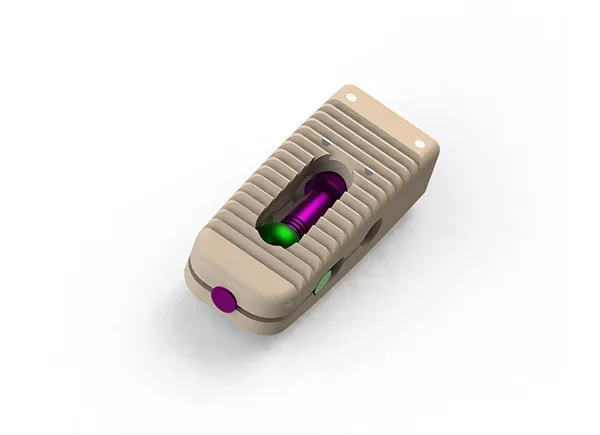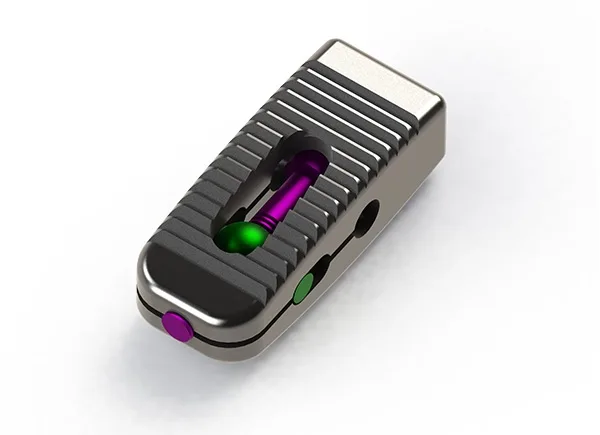
Interspinous Fusion Device

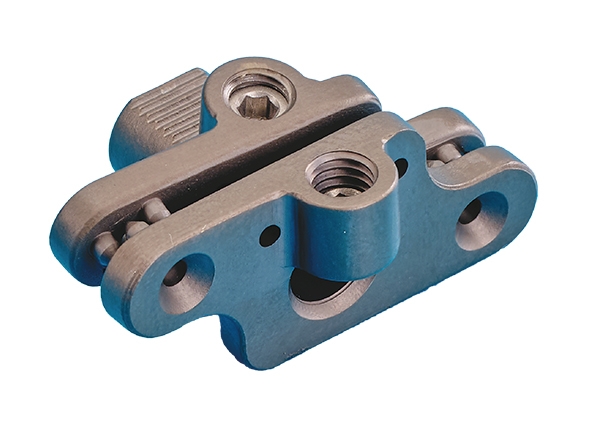
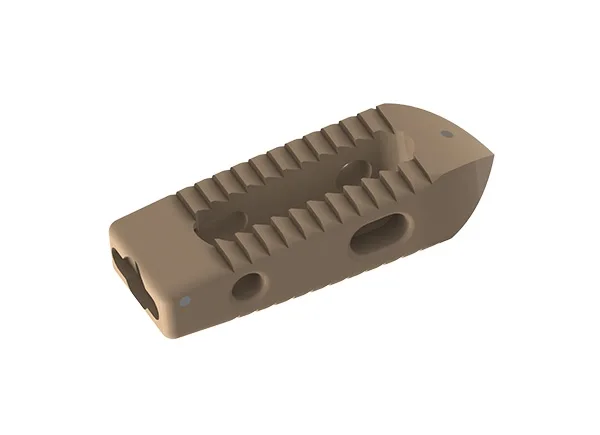
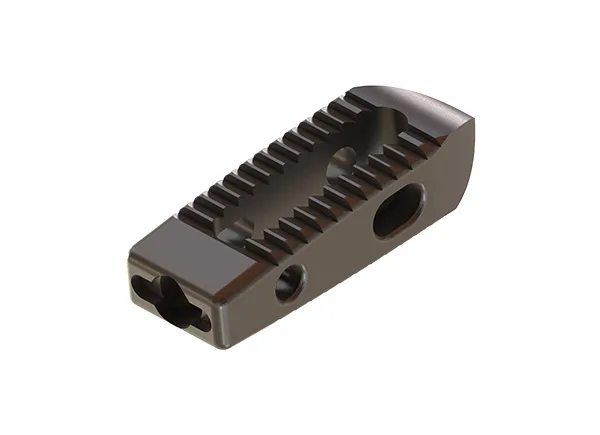
The Interspinous Fusion Device is an implant designed to fit between the spinous processes of the lumbar spine. It is manufactured from Ti 6Al-4V ELI (ISO 5832-3) and consists of a single component with expandable upper and lower projections that engage the spinous processes and fix the device in place. The Interspinous Fusion Device is supplied sterile or non-sterile in different sizes.

The Interspinous Fusion Device is implanted percutaneously through a cannula placed between adjacent spinous processes. Once positioned in the interspinous space, the Interspinous Fusion Device is deployed or expanded to provide distraction at the affected spinal segment.

The Interspinous Fusion Device comes with a set of proprietary instruments required to deliver it percutaneously. The instruments specially designed for implanting the Interspinous Fusion Device consist of a cannula, dilators, an interspinous reamer, an interspinous measuring device and a driver inserter used to deploy the device once it is in position. Additional general-purpose instruments in the set include a mallet, a retractor, a cannula handle and forceps.
Indications

The Interspinous Fusion Device is indicated for the treatment of skeletally mature patients suffering from leg pain, numbness and/or cramping (neurogenic intermittent claudication) secondary to a diagnosis of moderate lumbar spinal stenosis, confirmed by X-ray, MRI and/or CT evidence of thickened ligamentum flavum, narrowed lateral recess and/or central canal narrowing. The Interspinous Fusion Device is indicated for patients with impaired physical function who have undergone at least 6 months of non-surgical treatment and who experience relief in flexion from symptoms of leg/buttock/groin pain, with or without back pain. The Interspinous Fusion Device may be implanted at one or two adjacent lumbar levels in patients for whom surgical treatment is indicated at no more than two levels from L1 to S1.

For this intended use, Moderate Degenerative Lumbar Spinal Stenosis is defined as follows:

  • A 25% to 50% reduction of the central canal and/or nerve root canal (subarticular, neuroforaminal) compared with adjacent levels on radiographic studies, with radiographic confirmation of any of the following:
  • Evidence of thecal sac and/or cauda equina compression
  • Evidence of nerve root impingement (displacement or compression) by osseous or non-osseous elements
  • Evidence of hypertrophic facets encroaching on the canal
  • AND associated with the following clinical signs:
  • Presents with moderately impaired Physical Function (PF), defined as a score of ≥ 2.0 on the Zurich Claudication Questionnaire (ZCQ)
  • Ability to sit for 50 minutes without pain and to walk 50 feet or more.